3D printing in Porto: prototypes and small series

FDM and SLA, under one roof
We run both of the technologies that matter for product development, so the choice is made on what the part has to do rather than on what happens to be free in the workshop.
FDM
Fused deposition modelling builds the part up from extruded filament. It is the workhorse for functional parts: jigs, fixtures, housings, brackets and anything that has to be assembled, clipped, screwed or dropped. Engineering filaments behave much closer to injection moulded plastic than resin does, which makes FDM the right call when the prototype has to be tested rather than looked at. The trade-off is a visible layer texture on curved surfaces.
SLA
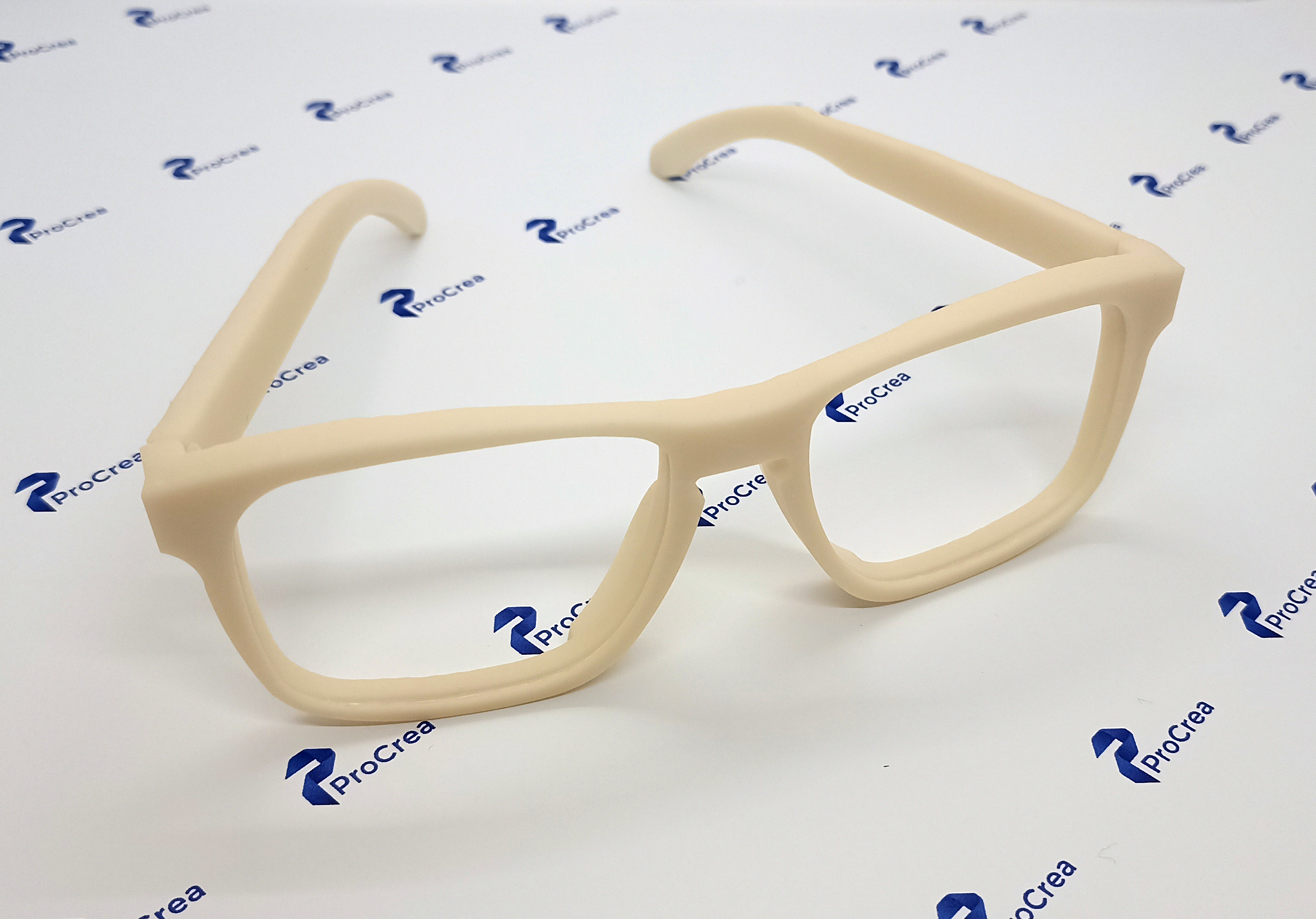
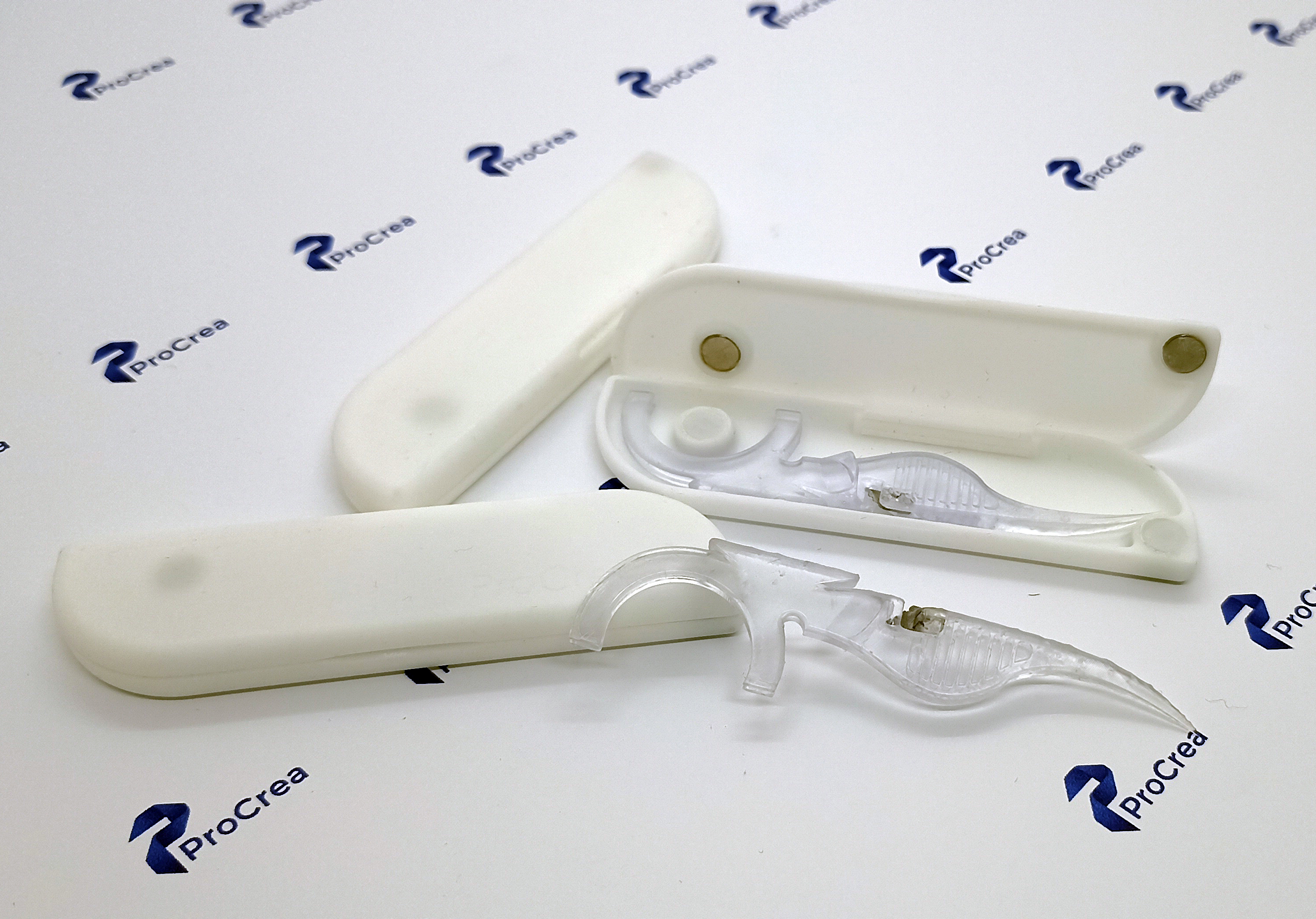
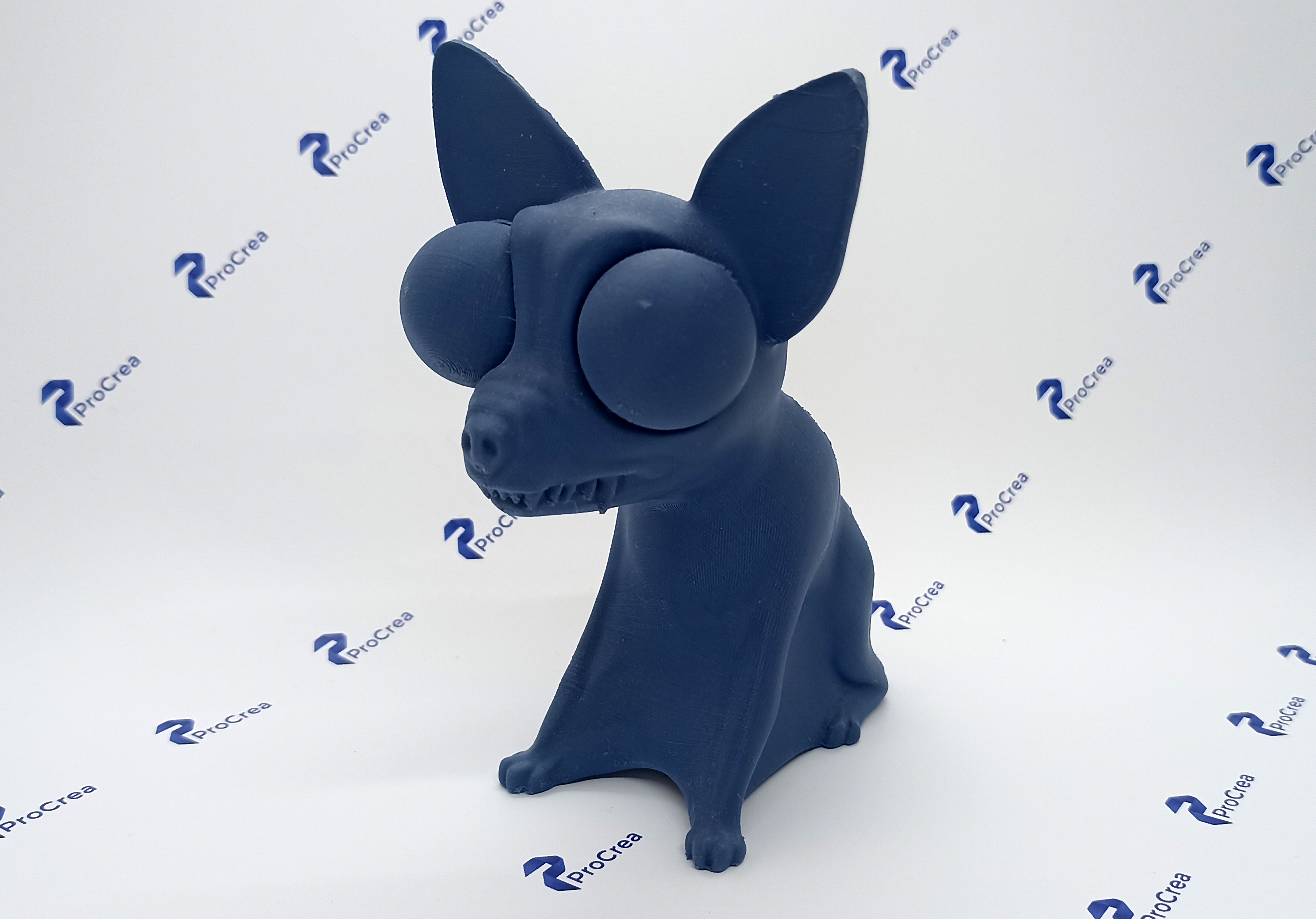
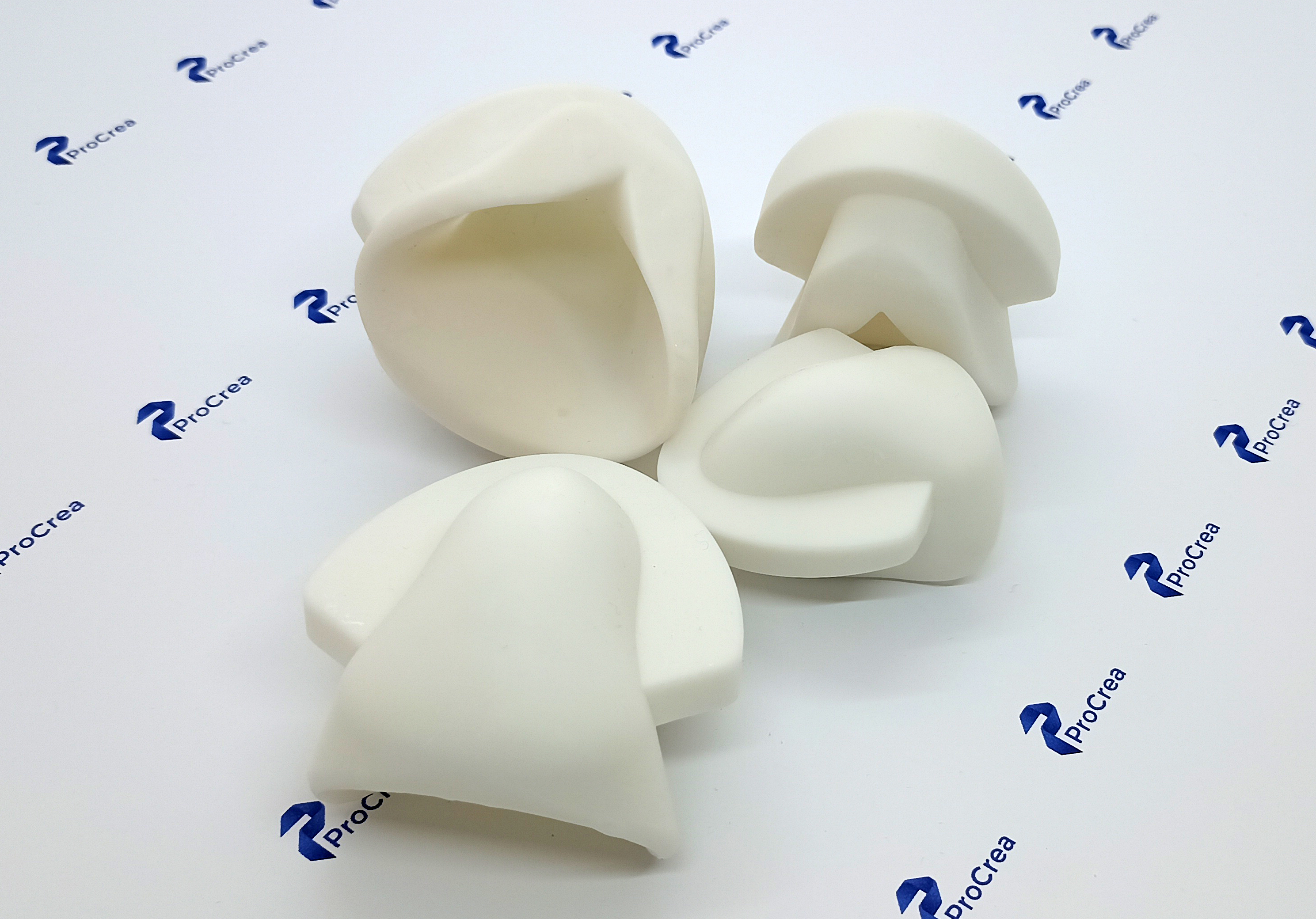
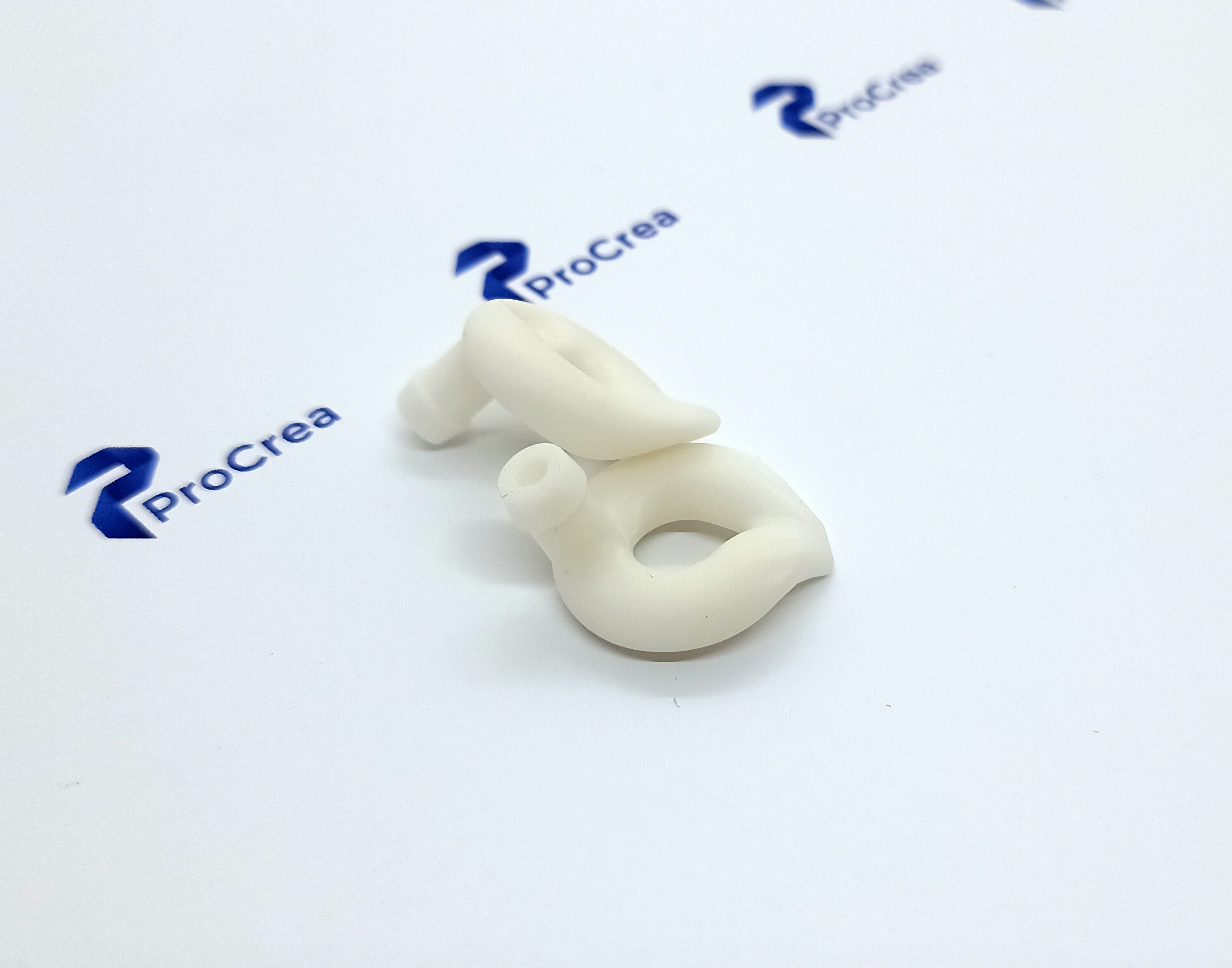
Stereolithography cures liquid resin with light, and the surface comes off the machine smooth enough that the layers are hard to see. It holds fine features that FDM would round over — thin walls, small text, sharp lens seats, tight internal geometry. It is what you want for appearance models, for parts a client or an investor will hold, and for anything that has to be transparent. The eyewear frame and the small components in the samples below are SLA; the figurine is FDM, and the difference in surface finish is visible in the photographs.
Not sure which fits? Send the model and say what the part has to survive. Choosing between the two is part of the job, not a question we expect you to arrive with an answer to.
A printer farm for small series
A single printer makes prototypes. A farm of them makes a product launch possible before the tooling exists.
The expensive moment in bringing a physical product to market is committing to an injection mould. The tool costs real money, takes real time, and locks the geometry — and it is normally ordered before anyone knows whether the market wants the product at the price you need to charge.
Running a bank of Bambu Lab P1S machines in parallel closes that gap. We produce the first small series directly, so you can put genuine units in front of genuine customers: run a crowdfunding campaign, ship a pilot batch, hand stock to a distributor, test two variants of the same product against each other. The geometry can still change between batches, because nothing has been cut into steel yet.
By the time the mould is ordered, the design has been through real users and the volume is a decision based on evidence. Our dental product client went through exactly this route, from concept to mass production.
Materials
The material is usually a bigger decision than the printer. We keep a broad range on hand and order specialised grades in when a part calls for them.
FDM filaments
- PETG — the general-purpose choice for functional parts: tougher than PLA, and it tolerates outdoor and warm conditions far better.
- ABS and ASA — for parts that need heat resistance and impact strength. ASA additionally holds up to UV, which matters for anything mounted outside.
- PA (nylon) — for wear surfaces, living hinges, gears and snap fits that have to survive repeated cycling.
- Carbon-fibre-filled grades, such as PA-CF20 — carbon-reinforced nylon for stiff, dimensionally stable parts where an unfilled plastic would flex or creep.
- TPU — flexible, for seals, gaskets, bumpers and grips.
SLA resins
- Standard photopolymers — appearance models, fit checks, and any part where surface finish is the point.
- Clear resin — light guides, lenses, fluid paths, and anything where you need to see what is happening inside the part.
- Heat-resistant and flexible resins — for parts that sit near a heat source, and for compliant geometry.
Other engineering plastics can be sourced to order. Tell us the operating conditions — temperature, load, contact with skin or fluids, indoors or outdoors, UV exposure — and we will recommend the material rather than asking you to specify one.
Who this is for
We are a mechanical engineering company that prints, not a print shop, and the way we take work reflects that. Printing runs in one of two contexts:
- Inside a development project — where printing is one step in designing your product, and we print whatever the project needs, in whatever quantity it needs, as the design iterates.
- As a production run of 50 units or more — where the design already exists and you need parts made.
What we do not take on is one-off printing of a single part. If that is what you need, a local print service will serve you faster and more cheaply than we can, and we would rather say so than waste your time.
We also do not print metal. Where a part has to be metal we produce it by CNC milling, sheet metal work or casting — see our services — and we will say up front when printing is the wrong process for what you are describing.
Printing is the last step, not the whole service
Most print services start when you send an STL. We can start considerably earlier — at a sketch, a requirement, or a competitor's product you want to beat.
One team takes the product from development through prototyping to production, without the handovers where things usually go wrong. We design the part, print and test it, revise it against what the test showed, produce the pilot series on the farm, and prepare it for mass manufacturing when the volumes justify moving to injection moulding, CNC milling or sheet metal — all of which we also do.
If a printed part keeps failing and you cannot work out why, that is a design question more often than a printing one, and it is the kind of question we are set up to answer. See the case studies for how this has run on real projects.
Common questions
Do you take one-off prints?
No. Printing runs either inside a development project, where quantities follow whatever the project needs, or as a production run from 50 units. For a single part, a local print service is the better answer.
What post-processing is included?
Parts are cleaned of support material. We do not offer sanding, painting, priming or inserts as a service — if a part needs a cosmetic finish, tell us before we quote, and we will be straight about whether printing is the right process for it at all.
Do you sign an NDA?
Yes, as a matter of course.
Who owns the CAD?
On R&D and development projects we hand over the source files — you own the design we produced for you. On print-only work the files are usually yours to begin with; where source data is generated on our side, ownership is agreed separately and handing it over is normally possible. Ask before the project starts rather than after.
Can you print from a photo or a sketch?
Yes. If there is no CAD model we can create one. For an existing physical part we usually start from a 3D scan, which is how we develop vehicle accessories that have to fit a specific car.
Can you fix a part that failed elsewhere?
Usually. Bring the part and what went wrong with it. Failures come down to a wall thickness, a print orientation or a material choice far more often than to the machine.
What happens when volumes outgrow printing?
We prepare the design for mass production and take it there. Injection moulding, CNC milling, casting and sheet metal are all in scope, and moving a product across that line is routine work for us rather than a referral to somebody else.
Where are you based?
Our workshop is in Matosinhos, in the Porto metropolitan area, and we work with clients across Europe and beyond.